On, In, and Around: I'll Be There Wishing Good Things for You
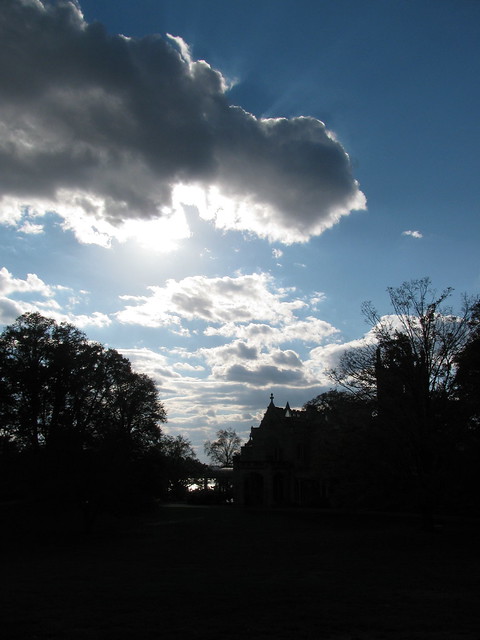
I took my girl to this castle-ish place (above) when she was a baby. She does not remember it.
Since then, fifteen years have passed. Six of those years (almost half her life), I have been a writer in this space. To her, I suppose, that must seem a lifetime.
Over that "lifetime," I have written almost 1,300 blog posts, both here and at two other personal blogs. Other bloggers would have garnered more page views over all this time, but I feel satisfied that these posts drew over 250,000 views.
Half a lifetime for my girl.
And what is that in blog years? (Somebody said to me yesterday that blog years should maybe be calculated like dog years. Maybe I've been really blogging for about forty years then.)
This week, one of my authors (I'm a small press publisher) sent me flowers, to thank me for believing in her book. I do believe in it. She'll go far. The National Review and World Magazine have both requested copies. She's going to be on quite a few radio shows. I want that for her.
I no longer want these things for me. If I ever did (I'd like to think I wanted these things as an author; it seems like the kind of things an author should want, to gain a certain level of success. I know I want my authors to want these things for themselves).
Anyway, I guess it's not important to settle this question. What's important is how I want things for other people. And how this has become the focus of my life's work.

Why yes, I'll still be a writer. That won't end. It might even grow.
Not that I necessarily want that either. Five books is a lot to care for. (Still, I do seem to have this little compulsion to keep putting things onto pages, where people can take them to bed, or on a picnic, or to their back porch.)
I do not any longer have a real desire to blog. "Forty years" is a long time. Or six, if you want it in human years. Or half a lifetime, if you look through the eyes of my daughter.
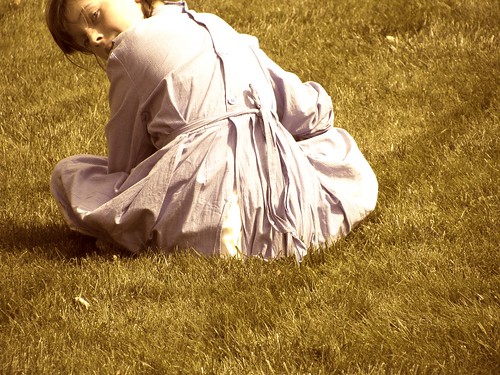
My girl is growing up. I want things for her. I want things for my authors.
And look... the sun is going down (or is it, in fact, just coming up). Let's walk into the sunset (or the sunrise), as the case may be. I'm in a good mood (don't let the mini-drama of this post fool you), so if it's okay with you, I'd like us to sing and laugh along the way.
Race you to the castle!
____
You can always find me at llbarkat.com, to see if I do, in fact, keep writing (Oh, I'm sure I will. It's just a question of how and where). And I wish you a beautiful writing and reading journey, whichever you are on (and if you are a writer, it must be both). Thank you for letting me love you so long through the medium of words.
L.L. Barkat is the Managing Editor of Tweetspeak Poetry and co-creator of the quotes-on-photos app WordCandy.me. Give her another six years and who knows. She might be selling chocolate or teas.
Labels: in, my writing story, On, On in and Around Mondays, writing life
posted by L.L. Barkat at 12:16 PM
45 comments